
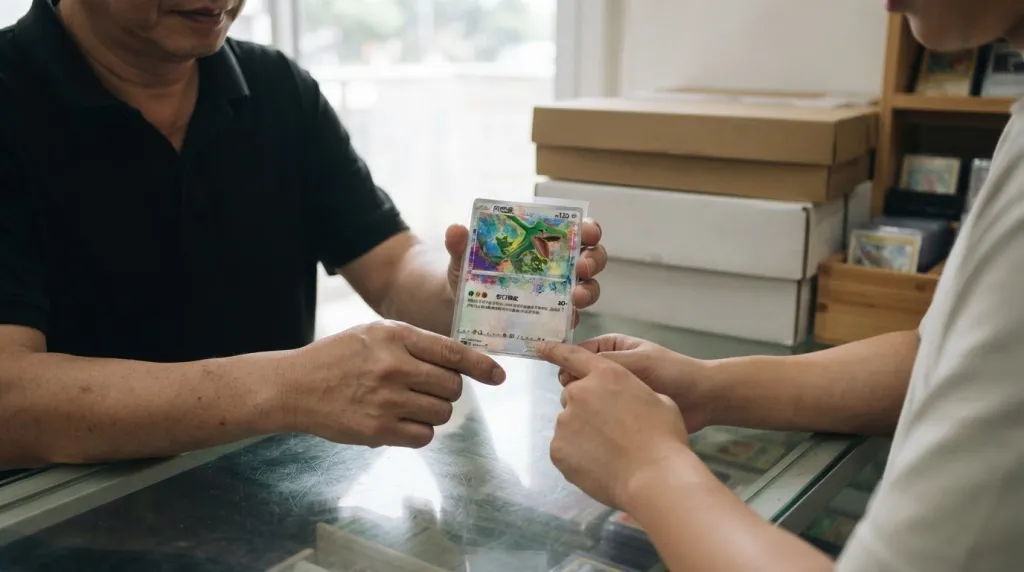
When you request hard to find Pokémon cards from a local Singapore shop, give the exact card or product name, set, card number if known, language, and preferred condition. Ask for the stock status, item condition, identifying details, and the terms and expected timing for sourcing, then assess whether the reply matches what you want. High demand can make some Pokémon TCG products difficult to find, so this guide covers what to include in your request and how to assess the stock and seller details you receive.
Key Takeaways
- High demand can affect Pokémon TCG availability, so stock may vary between products and sellers.
- Give a shop the card name, set, card number if known, language and preferred condition to make your request clear.
- Assess a seller’s reply by matching the item details and condition to what you asked for, not just by the stock claim.
- A local shop can help connect a sourcing request with collector networks and trading groups.
Resellers and stock availability
High demand can make some Pokémon TCG products difficult to find in Singapore. Availability varies by product and by the stock sellers can access.
Requesting Hard-to-Find Pokémon Cards from Local Shops
A clear sourcing request identifies the exact card or product you want. Include its name, set, card number if known, language, and preferred condition. Specify whether you want a single card or a sealed product. These details help a shop search for the right version instead of a similar card from another set or language release. If you are flexible, say which details can vary.
Some resellers buy Pokémon cards in bulk and mark them up for resale, which can contribute to empty shelves. High demand also affects availability, so a product missing from one shop may still appear through another stock channel. Reprints can replenish products at participating retailers, but they do not mean every set or card is immediately available. A request is more useful when it specifies whether you want a sealed product or a single card.
Special Order and Pre-Order Timing
There is no single timeframe for special orders or pre-orders in Singapore. A pre-order follows the product’s release and retailer fulfilment schedule; a special order depends on locating the requested stock and arranging delivery. Distinguish between the two when planning around a release date or deciding whether to wait for a particular item.
Before accepting an offer, compare its details with your request. Check the exact product name, set, language, whether it is sealed or a single card, and the stated condition. For marketplace listings, review seller ratings and feedback. Make sure the item information and fulfilment terms are clear so you can decide whether the offer suits your collecting plans.
Stock can change as retailers receive replenishments or sellers locate available copies. If you are waiting for a reprint, monitor retailer restock notifications. For a pre-order, focus on release and fulfilment details; for a special order, focus on whether the item matches and what the sourcing update says.
Info needed to source rare Pokémon cards in Singapore
A useful sourcing request explains what would make an item suitable for your collection, not just its name. If you need to request hard to find Pokémon cards, state your goal and which trade-offs you would consider. This helps a shop distinguish must-haves from preferences and present options that fit your priorities.
- Collection purpose: Explain whether you’re completing a set, building a themed binder, or adding a card for display.
- Non-negotiables: Identify the details you won’t compromise on, such as a particular artwork or printing.
- Acceptable alternatives: Say whether another version would work, and describe what makes it acceptable.
- Decision preference: State whether you want to review any proposed substitute before moving ahead.
These distinctions matter when a search turns up a close match rather than your exact target. A collector completing a specific set may want only the matching printing, while someone building a themed binder might accept another artwork featuring the same Pokémon. Explain which applies to you instead of leaving the shop to guess.
Set out your priorities in plain language. You might rank the exact printing first, then artwork, followed by other preferences. Avoid describing every feature as equally important if some are flexible. A clear order helps the shop assess a possible match and explain where it differs from your ideal item.
Explain how you want alternatives presented. Ask for differences to be described before you decide, rather than treating a similar card as interchangeable. This keeps a search for hard to find Pokémon cards aligned with your collecting goal, even if the first option is not a perfect fit.
Keep the request focused on one collecting goal, with any acceptable trade-offs stated clearly. To begin an enquiry, send your Pokémon card sourcing request and explain what would make a match right for you.
Which Singapore Pokémon TCG shops offer sourcing for hard-to-find cards?
Some Singapore Pokémon TCG shops offer sourcing alongside listed stock. This can help when the card you want is not in a shop’s current catalogue. Review how the service works, how updates are provided, and what you need to approve before an order proceeds.
Assess a sourcing service by checking these practical points:
- Scope: Does it handle Pokémon singles, sealed products, or both?
- Search updates: Will the shop tell you when it finds a possible match?
- Approval: Can you review the proposed item before committing?
- Item details: Does the offer distinguish a single card from sealed stock?
- Terms: Are the payment and fulfilment arrangements explained clearly?
Sourcing is different from browsing regular stock. A shop may list sealed products while handling a single-card request separately. Check that the service covers the type of item you want. If you are looking for a specific card rather than a sealed product, make sure the request is for that format.
Pay attention to how the shop communicates uncertainty. A useful update distinguishes a confirmed match from a possible lead and explains any difference between your request and the item offered. You can then decide whether a substitute suits your collection before proceeding.
For online purchases, consider the shop’s identity, customer feedback, and the clarity of its terms. Reviews can show how past customers describe their experience, while written details make the proposed arrangement easier to understand. Base your decision on the sourcing process and item information provided.
Sourcing is most useful when you have a clear target but need help locating it. If you prefer to choose from items already available, browsing a standard catalogue may suit you better. The right approach depends on whether you want a particular card or are happy to select from listed stock.
How can a local shop help you source hard-to-find Pokémon cards from Singapore collectors and trading groups?
A local shop can extend a search beyond its own shelves by connecting with Singapore collectors and trading groups. Community members may trade cards or offer rare singles for sale. A shop can bring your request to those networks and pass back possible matches for you to assess.
This route is useful for older cards, alternate artwork, or a particular printing that is no longer easy to find in retail stock. For example, a collector may have the exact card from a past expansion, while another has only a different language version. The shop’s role is to clarify the match and relay the seller’s details.
A sourcing process can include:
- Share the target: The shop uses your request to identify a suitable card among collector offers.
- Review the match: Compare the card name, set, language, and printing against your target.
- Assess condition: Ask for clear photographs of the front and back, and note visible wear.
- Understand the arrangement: Review the quoted item, shipping, GST, and fulfilment terms before deciding.
Photos matter because a card’s condition can affect whether it suits your collection. Close-ups can show edge wear, whitening, creases, or surface marks that a brief description may miss. For graded cards, check that the slab label identifies the Pokémon and set you requested. A similar-looking card is not necessarily an exact match.
Trading groups can surface collector-held cards, but each offer still needs clear details. A shop can relay the seller’s stated condition and product information, then give you a quote to review. Keep the decision tied to the exact card and terms presented. If the available copy differs from your target, decide whether that difference is acceptable before proceeding.
If you want a shop to search collector channels, submit a Pokémon card sourcing request with your target details.
Gaming Otaku
Gaming Otaku offers trading card sourcing for collectors seeking a specific Pokémon card or product. It’s a practical next step when the details you want aren’t easy to find in regular stock, or when you’d rather have a shop handle the search. Share the card or product identity, preferred language, and condition requirements so the request has a clear target.
Review the sourcing quote against those details before deciding. Check that it describes the item you requested and makes its terms clear. If a proposed match differs in language, condition, or format, decide whether that difference works for your collection before proceeding. This keeps the decision grounded in the actual item, rather than a similar listing or a broad description.
For a specific Pokémon TCG target, contact Gaming Otaku with the item name or a link to request sourcing.
Make your next sourcing request count
A hard-to-find card can be more than a gap in your binder. It might complete a set, preserve a favourite version, or give your collection a personal focus. Treat the sourcing quote as a decision point: does the item match your priorities, and are you comfortable with the fulfilment terms and ETA?
When you request hard to find Pokémon cards, be clear about which details are essential and where you can be flexible. That keeps the search focused, whether you want one specific printing or would consider another version. Review the proposed item before accepting: a well-matched card is more useful than a quick substitute that misses your collecting goal.
Gaming Otaku’s collector-run team supports collectors looking for trading cards through its sourcing service. If you have a particular Pokémon card in mind, contact Gaming Otaku about sourcing and share what you’re hoping to add. Your next collection milestone could start with a clear request.
Frequently Asked Questions
Pokémon Shortage Explained: Why Is It So Hard to Find Pokémon Cards?
High demand, resale buying, and supply disruptions can make particular Pokémon TCG products hard to find. Bulk buying may leave fewer items on some shelves, and factory closures or shipping delays can affect supply chains. Reprints can replenish stock at participating retailers, but availability still varies by product. If you are waiting for a specific release, distinguish a temporary stock gap from a card that calls for collector sourcing.
How can a shop help you avoid counterfeit Pokémon cards and scams when sourcing cards online?
A shop can reduce sourcing uncertainty by using established supply channels and clearly identifying the item offered. Gaming Otaku states that its items are 100% authentic and sourced from official distributors and trusted shops. Before accepting a proposed match, compare its card name, set, language, and condition with your target. Review the item details and quote together, and avoid proceeding if the offer does not match what you agreed to buy.