
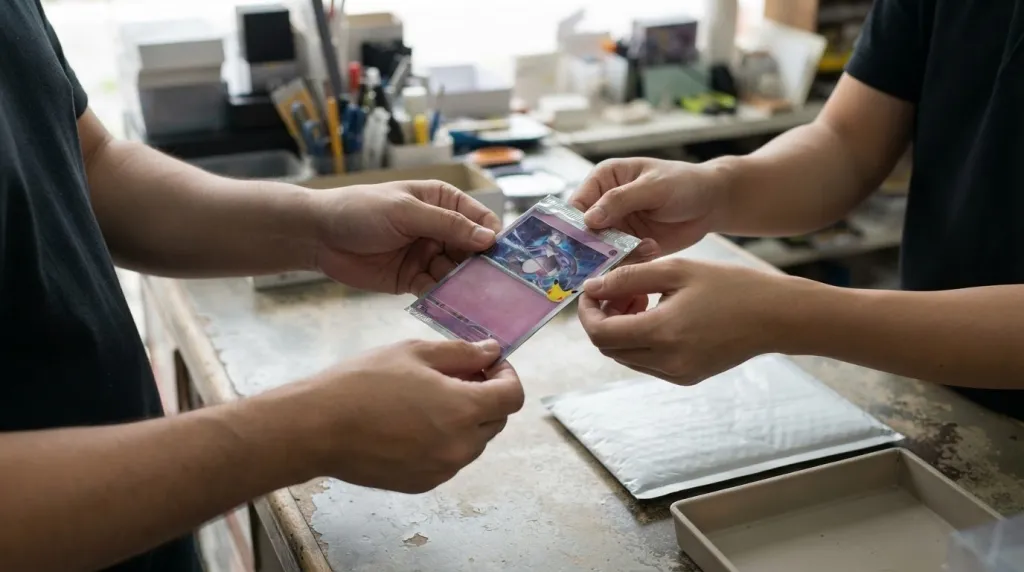
The commission is only part of the arrangement: how trading card consignment works also depends on how cards are listed, sold, paid for and handled if they remain unsold. You entrust your cards to a seller, who lists and sells them, then pays you the proceeds after deducting the agreed commission.
Looking beyond the commission helps you understand the full arrangement, including who handles shipping, how long the agreement lasts and what happens to cards that don’t sell.
This guide explains the process in Singapore so you can review the terms and decide whether consignment suits your collection.
Key Takeaways
- Gaming Otaku’s consignment commission ranges from 15% down to 5%, with no listing fees.
- Shipping arrangements and responsibility for cards in transit are key terms to understand before consigning.
- Your agreement should explain how long cards are listed and what happens to unsold cards when the term ends.
- With Gaming Otaku, consignors receive a PayNow payout within 3 working days after the buyer receives the card.
Sales revenue splits and commissions
A consignment commission is the seller’s share of a completed sale. The commission ranges from 15% down to 5%, with no listing fees. Your net proceeds are the sale amount less the agreed commission and any other deductions stated in writing. Confirm whether the percentage applies to the card’s final selling price and whether shipping or payment processing is covered. This keeps the listed price distinct from your payout.
What tax, contract and consumer protection rules apply in Singapore? Tax treatment depends on your circumstances and the transaction. Put ownership, commission, payment timing, returns, cancellations and dispute handling in written terms. Consumer and contract rights also depend on the arrangement, so the agreement should record what both sides accept. A written record gives you a clear reference if questions arise after a sale.
What trading cards are accepted for consignment in Singapore? Acceptance depends on the seller’s intake criteria, which may cover game, language, authenticity and condition. A Pokémon single in clean condition and a creased sports card may receive different decisions. Graded slabs, raw singles and sealed products are different formats, so the intake record should identify each accepted item accurately. Acceptance of one card doesn’t automatically mean an entire collection qualifies.
How do consignment shops price and value trading cards? They consider condition, set, language, rarity, buyer demand and comparable sales. Surface wear, whitening, creases and centering can affect a card’s appeal. For example, two copies of the same Pokémon card may have different asking prices if one is near mint and the other has visible edge wear. The seller sets the listing price, while the commission determines your share after a sale. Written terms should explain the pricing basis and any deductions.
Shipping, freight, insurance and returns
Shipping arrangements affect a card’s condition and delivery record. Before submitting cards, make sure the agreement explains delivery, insurance and how unsold items are returned.
Shipping Arrangements
Shipping arrangements explain how cards are sent to a consignment partner and how unsold items are returned. The agreement should say who is responsible for each leg of the journey. It should also explain how loss or damage in transit is handled, so responsibility is clear.
Shipping and Drop-Off Options for Consigning Cards
Shipping and drop-off options explain how your cards reach the seller. The method affects convenience, handover records and when responsibility transfers. If you ship a submission, include an item list that matches the consignment form, and keep a copy for your records. If drop-off is offered, establish how receipt and item condition are recorded. Clear confirmation of receipt tells you when the cards have entered the selling process.
How a Consignment Partner Handles Card Submission and Shipping
A consignment partner’s submission process records what arrives and the condition of each card. The consignor provides an item list that matches the consignment form. The partner can then compare the received cards with that record and note any differences or visible damage. This gives both sides a reference before listing begins. Shipping terms should also explain how cards are packed for delivery to buyers, who handles transit issues and how unsold cards are returned when the agreement ends.
Keep the submission record and shipping updates with your agreement. Together, they help clarify which cards were received, sold or returned.
Consignment agreement duration and unsold goods
The agreement sets how long cards remain listed and what happens if they don’t sell. It should also document ownership, payment timing and responsibility for loss or damage.
Ownership of Consigned Goods
Ownership of consigned goods usually stays with you until a buyer purchases them. This matters because handing over a card for listing doesn’t itself transfer ownership. The agreement should identify each card and explain when ownership changes after a sale. For example, a Pokémon single should be documented by its name and condition, so both sides can identify the item correctly if it remains unsold or is returned.
Selling Time and Seller Payment
Selling time is the period a card takes to find a buyer; payment follows the agreed sale and receipt terms. A consignment period is typically 30-90 days, but an individual card may sell sooner or remain unsold until the term ends. Consignors receive a PayNow payout within 3 working days after the buyer receives the card. The agreement should state how the seller is updated about a completed sale and payout.
At the end of the agreed period, unsold cards may be returned to you according to the arrangements stated in the agreement. One example is a 60-day agreement in which 30 of 50 greeting card sets sell, leaving 20 to return. Select a clear end date and document whether the listing can be extended or the cards returned.
Insurance terms should explain whether consigned cards are covered against loss or damage during transit or storage. An ADR consignment note is intended for dangerous goods transported under the European Agreement concerning the International Carriage of Dangerous Goods by Road. For ordinary card consignments, keep clear records of the items and any handling needs; dangerous goods may require special transport documentation.
Finding a consignment partner
Understanding how trading card consignment works can help you choose a partner whose process suits your collection. A Pokémon collector consigning Japanese promo cards may need different listing details from someone offering sports cards. Look for accurate item identification, clear condition descriptions and a pricing process that accounts for language, edition and visible wear. These details help buyers understand exactly what is for sale.
Review the agreement before handing over a collection. It should identify who owns each card, how the seller’s commission is calculated, when payment follows a sale and what happens to unsold items. A written example can clarify the arithmetic: the agreement should show how commission affects your proceeds from a sale. Make sure deductions and return arrangements are explained too.
Ask how the partner records incoming cards and handles differences between your submission list and the items received. For example, if you send three cards and one arrives with a bent corner, an intake record can help establish its condition. Clear packing instructions and a documented handover also reduce confusion about responsibility in transit. Updates should tell you when cards have been received and listed.
A consignment partner should explain how the process works for different card types. A sought-after graded slab and a lower-demand raw single may need different descriptions and buyer audiences. Ask how listings show condition, language and grading details, and how price changes are handled. Clear answers help you understand the partner’s process for these decisions.
Compare the full arrangement, not just the commission percentage. A low rate may matter less if the terms leave shipping, handling, payment timing or returns of unsold cards unclear. Choose a partner whose written process covers every stage, from receiving the item to its sale or return. For a collection with varied cards, accurate records and consistent handling are practical signs of a well-managed consignment arrangement.
Gaming Otaku: Trading card consignment
Gaming Otaku offers trading card consignment for collectors who want a seller to manage listing and selling. It can suit you if you have cards to sell but prefer not to handle buyer communication and fulfilment yourself. As a collector-run shop, Gaming Otaku presents submitted cards with details that help buyers understand the items on offer.
After a buyer receives the card, consignors are paid by PayNow within 3 working days. The payout follows the completed sale, so the timing is tied to buyer receipt rather than the date you submit your cards. Keep a record of each card you consign, including its name, language and condition, to make it easier to match a payout to the item sold.
Consignment can work for individual cards or selected pieces from a larger collection. A sealed Pokémon promo and a Japanese One Piece single, for example, each need an accurate description. Clear details distinguish similar cards and help buyers understand what they are purchasing.
Gaming Otaku’s retail range includes the sealed Pokémon 30th Celebration Mewtwo (What’s Your Favorite?) Stamp Promo Card and the Japanese ONE PIECE Card Game 4th Anniversary Four Emperors Treasure Get Campaign Pack. These examples reflect the trading card categories collectors may encounter in the shop. For your own cards, the consignment arrangement should identify what is listed and explain how unsold items are handled.
If you’re considering having cards listed and sold on your behalf, contact Gaming Otaku to discuss trading card consignment.
Frequently Asked Questions
What Is Consignment?
With consignment, you authorize a seller to market your card without selling it directly to the seller. You don’t receive proceeds simply by handing over the card. Before agreeing, make sure the document identifies the cards and explains what decisions the seller can make about presentation and listing. This distinguishes a consignment arrangement from an outright sale.
What are the pros & cons of selling on consignment?
Consignment can save time spent preparing listings and responding to buyer enquiries, while giving your card access to the seller’s sales channel. The trade-off is less control over the listing and no immediate proceeds. If you want to approve changes to a card’s asking price, for example, include that expectation in the agreement. Consider how much control and involvement you want.
How does trading card consignment work step by step?
The exact process depends on the agreement, but the main stages are setting the terms, recording card details, preparing the listing, completing the buyer’s purchase and paying out the proceeds. If a card has language or edition variants, the listing should identify the exact version. That detail helps prevent buyers from mistaking one printing for another.
What happens to a trading card if it does not sell or is damaged while on consignment?
The agreement determines the options for an unsold card and the process for reporting damage. If a card arrives back in a condition you did not expect, keep the packaging and note the issue promptly. These details can help clarify where the problem arose. The terms should explain who reviews the issue and what happens next, rather than leaving the outcome unclear.
Trading card consignment vs selling to a shop or selling online: which is better?
Choose based on the balance you want between speed, control and effort. A direct sale to a shop may suit you if you prefer a single transaction over managing a listing. Selling online yourself gives you more direct control, but also means handling buyer messages. Consignment sits between these options: a seller manages the sale under agreed terms.