
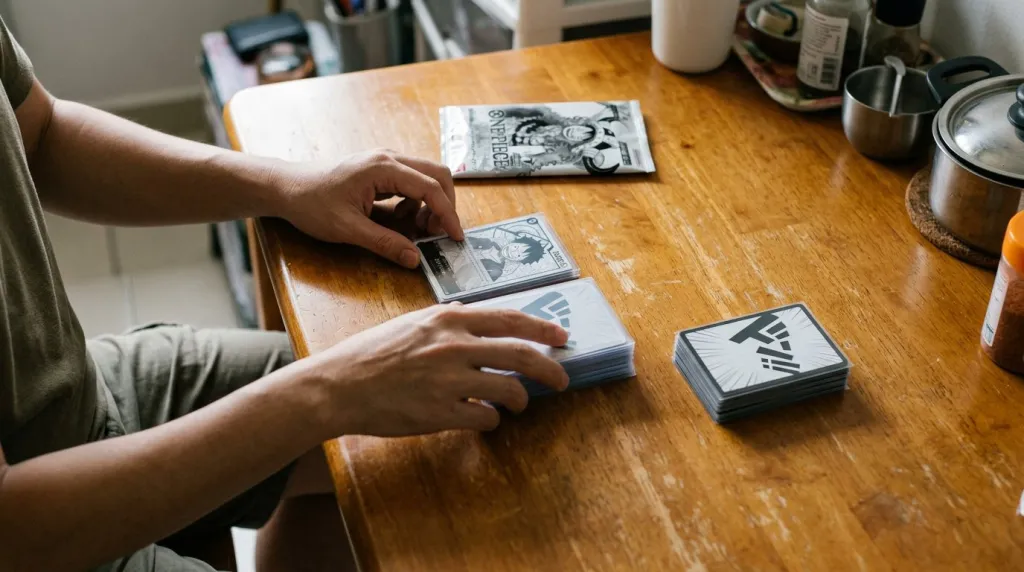
The One Piece Card Game is a two-player trading card game, and its cards are divided into five types. If you’re new, start by learning what each card type does and how players use them during a match; if you already play, booster packs and expansion products offer another way to build your collection and explore different releases.
Collecting can be part of the fun, too. Alongside playable cards, fans may seek special releases, tournament rewards, and merchandise inspired by the series. Each has a different appeal, so check what a product is for before deciding whether it suits your deck, collection, or display.
This guide covers the basics, explains how booster and expansion products fit into the hobby, and looks at tournament rewards and collectibles. You’ll also find One Piece card and merchandise options available through Gaming Otaku in Singapore.
Key Takeaways
- Learn the basic play sequence and how card roles shape your decisions during a match.
- Compare booster and expansion formats so you can choose products that fit your playing or collecting goals.
- Understand how tournament rewards differ from regular releases, and what to consider when collecting them.
- Explore playable cards and character merchandise as separate ways to build a collection around the series.
Beginner rules and tutorials
The One Piece Card Game is played by two players. Each player uses a Leader, a deck, and DON!! cards. Your Leader determines your deck’s colour and guides its strategy. During play, you spend DON!! to play Characters, use effects, or strengthen attacks. The goal is to defeat the opposing Leader by reducing their Life and landing an attack when they have no Life cards left.
A typical match takes 35 to 60 minutes. Check the product packaging for age guidance before playing. Start with the official Rule Overview Sheet, dated December 23, 2022, then learn the main turn steps. Draw and refresh, gain DON!!, play cards, attack, and finish your turn. Read each card’s effect before resolving it. Timing matters because effects can change what happens during an attack or another action.
- Check your Leader. Its colour and effect shape the deck’s choices and play style.
- Read the cost. DON!! pays for characters, events, and some effects.
- Choose an attack. A Leader or character can attack an opposing Leader or rested character.
- Resolve the result. The defending player may use a Counter from hand, or take the hit.
- Track your Stage. Each player can have only one Stage card in play at a time.
The official tutorial app offers beginners a guided way to learn the rules. Follow its prompts in order and focus on what each action changes. Practise reading the Leader, Character, Event, and Stage effects shown in each lesson. If an effect is unclear, pause and read its full text before continuing. This helps you distinguish the card’s written effect from your assumptions.
For a paper reference, the official Rule Manual is dated June 23, 2023. The official detailed rules are dated August 28, 2026. Use the tutorial first, then consult the manual when a rule interaction needs more detail. This sequence helps you learn the basic turn before tackling precise card interactions.
Booster packs and expansion products
Pack and box contents vary by product and language. Compare the printed card count and pack count before choosing a format.
Booster Pack and Box Contents
Contents differ across releases. A Japanese PRB-02 Premium Booster pack contains 10 cards, and its box contains 10 packs. Japanese OP-14 The Azure Sea’s Seven packs contain 6 cards each, with 24 packs per box. English and Japanese releases can differ in pack and box configurations, so check the product details before buying. These examples show why you should check both language and pack configuration.
Box counts don’t tell you which cards you’ll pull. Booster contents are random, so compare the set code, language, cards per pack, and packs per box. These details help distinguish products with similar names and choose a format that suits your collecting goals.
Booster Product Types
Regular booster packs belong to numbered expansion releases, such as OP-10 Royal Blood. Extra boosters are separate releases, including EXTRA BOOSTER -Anime 25th Collection- [EB02], scheduled for May 9, 2025. Premium Boosters, such as Japanese PRB-02, provide another product format. Set codes help you sort products and identify which release you’re considering.
Card collections and special products serve a different purpose from a standard expansion. A mini tin, for example, can combine packs with a promotional card. Each Japanese TS-02 Mini Tin listing includes one promotion card and four OP-13 booster packs. For a themed collectible alongside standard expansions, explore the ONE PIECE Card Game 4th Anniversary Four Emperors Treasure Get Campaign Pack (JP).
Booster Pack Release Dates
Release dates identify when a product was scheduled to become available, not its contents. BOOSTER PACK -THE AZURE SEA’S SEVEN- [OP-14] and other sets have their own release schedules. The fourth-anniversary product was scheduled for August 28, 2026. EXTRA BOOSTER -ONE PIECE HEROINES EDITION vol.2- [EB-05] was scheduled for October 30, 2026.
The next listed booster release depends on the product schedule, so check the current listing before planning. Compare a date with the set code and language, especially when tracking releases across Japanese and English products. For your collection notes, record the full product name, code, language, and scheduled release date together.
Card collecting and merchandise
Campaign cards connect collecting with specific releases, events, or promotions. Record each card’s name, set code, language, and release context. These details help separate a campaign card from a standard expansion card. The official Playsheet, dated September 29, 2025, is another paper item tied to the hobby. Keep reference materials distinct from cards in your catalogue.
Tournament rewards have their own collecting history. The Kaido ST04-003 Championship 2023 Winner card was awarded to winners of Championship 2023 events. That context matters when you label a reward card. Note its printed name and event association, then keep those details with your collection record. Avoid treating a tournament card as an ordinary booster pull.
Promotional cards can also mark events outside tournaments. Cards for the second season of the live-action series were given away at college basketball games, beginning January 23, 2026. At each participating university, the promotional card giveaway continued for three games. That event link gives each card a distinct collecting context, so record the series tie-in and giveaway details alongside its name.
Use a simple catalog structure to make campaign cards easier to find. Start with the card’s printed name, then add its set or promo identifier, language, and condition. Record the event or product associated with its release, if known. Keep merchandise separate from playable cards to make your inventory easier to navigate. For example, a playsheet is a game aid, while a promotional card belongs in your card records.
- Event cards: Record the tournament or giveaway connected to the card.
- Campaign releases: Note the product or promotion name and language.
- Merchandise: Catalogue non-card items separately from trading cards.
A starter product can bridge play and collecting. The Set Sail Deck Set [SD-01] is described as ready to play, with everything needed in one set. The ST-26 Luffy starter deck contains 51 cards. If you collect sealed products, distinguish them from cards catalogued individually. If you play, track the deck as a complete product rather than splitting its contents across unrelated entries.
How do you build a legal One Piece Card Game deck?
Start with your Leader, then choose cards that fit its colour. The game has five card types, used across the main deck and other areas: Leader, Character, Event, Stage, and DON!! cards. Sort your cards by type before building. This makes it easier to spot which cards support your plan and which serve another role.
Next, check the rules that apply to the cards you want to play. The official detailed rules are dated August 28, 2026. The Tournament Rules Manual is dated January 16, 2026. Use the relevant rules when preparing for an organised match. For casual play, agree on the same format and card rules before starting.
Card legality can change through banned or restricted card updates. The listed banned and restricted cards are effective from October 12, 2026. Check that list when choosing cards, especially if your deck includes older releases. A card’s set code and printed name help you identify the exact version covered by a rule. Don’t assume similar artwork means identical card text.
- Choose your Leader. Use its colour to guide card selection.
- Sort the five card types. Separate cards for the main deck from other uses.
- Review each card. Match its name and set code against current restrictions.
- Read effect text. Check errata and revised text before relying on an older card.
- Review the rules again. Use the tournament manual for organised play.
The official rules for using cards in different languages were published on November 7, 2025. If your deck mixes language releases, consult those rules before play. The Block Number System was introduced on July 23, 2025, so check how it applies to your card choices. These details matter when assembling a deck from cards released across different sets.
For a collection that includes playable singles and campaign products, browse One Piece card options alongside your deck-building notes.
Gaming Otaku: ONE PIECE Card Game 4th Anniversary Four Emperors Treasure Get Campaign Pack (JP)
Gaming Otaku offers this Japanese campaign pack for collectors building a One Piece Card Game collection around special releases. Its JP designation helps distinguish it from standard expansions when you catalogue your cards and products. For a specific character card instead, the One Piece Japanese Donquixote Rosinante OP04-119 SP Single Card offers another focused addition to a One Piece Card Game collection.
The campaign pack suits collectors who prefer packaged items, while the Rosinante single is a named card. Gaming Otaku also offers the sealed Pokémon 30th Celebration Mewtwo (What’s Your Favorite?) Stamp Promo Card for collectors with interests beyond One Piece.
Contact Gaming Otaku to discuss which item fits your collecting plans.
Choose Your Next Collecting Goal
Choose a goal that gives each addition a purpose. You might focus on cards featuring characters you enjoy, campaign releases with a story behind them, or a playable selection suited to your approach to the One Piece Card Game. Your collection can centre on gameplay, favourite characters, or the history behind a release. You decide what belongs together.
Gaming Otaku is a collector-run hobby shop offering One Piece trading cards and collectibles. To source a hard-to-find card, share its name and any details you have through the shop’s sourcing service. That gives the team a useful starting point, whether you’re building a focused set or adding a piece for display. You don’t need every collecting decision settled before taking the next step.
Contact Gaming Otaku to talk through your collecting needs and keep building your collection at your own pace.
Frequently Asked Questions
What is the One Piece trading card game, and how do you play?
The One Piece Card Game is a collectible card game based on the manga, released to mark its 25th anniversary. Bandai released it in Japan on July 8, 2022, followed by a global release on December 2, 2022. Before choosing products, decide whether your main interest is playing, collecting character cards, or following special releases. That goal can guide what you look for first.
How does a typical turn work?
For a practical rules check, distinguish the card’s printed text from later corrections. The official One Piece Card Game published an Errata Cards update on May 16, 2025. If you’re using a card affected by revised text, use the corrected effect when interpreting that card. This is especially useful when an older card’s wording seems inconsistent with a later rules explanation.
Which sets have upcoming release dates?
The upcoming schedule covered in this guide includes THE DOMINANCE OF GOD [OP-18] and EXTRA BOOSTER -ONE PIECE HEROINES EDITION vol.2- [EB-05]. Their scheduled dates appear in the booster section above. Use each product’s full name and set code when noting its release, and keep Japanese and English editions distinct in your records. Release schedules help you plan which products to follow.
What are the best starter decks for new One Piece Card Game players?
The Set Sail Deck Set [SD-01] is described as ready to play, with everything needed in one set. The ST-26 Luffy starter deck contains 51 cards.