
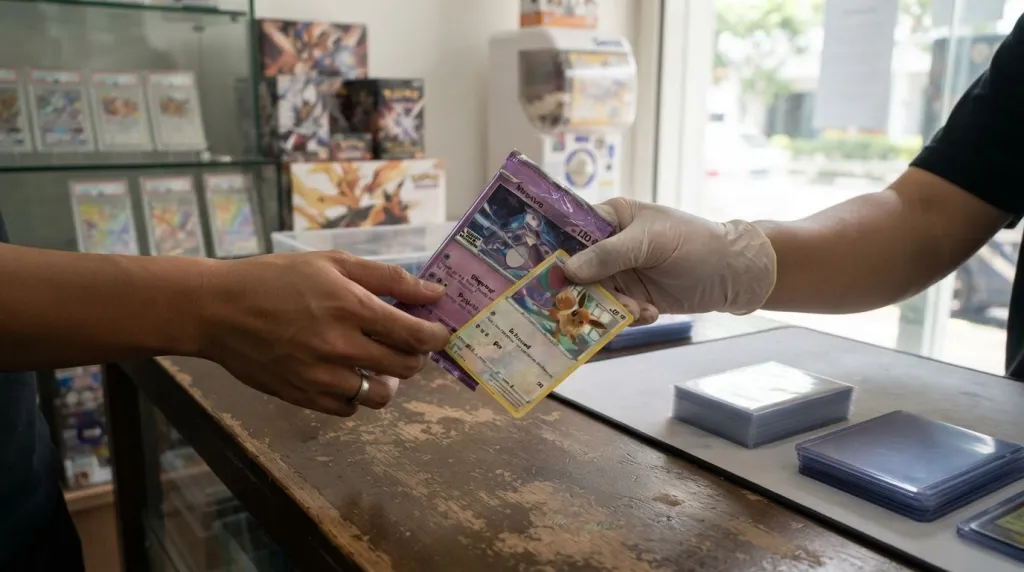
For Singapore collectors, selling Pokémon cards on consignment means entrusting cards to a service that handles their sale while you retain ownership until they sell. Sealed Pokémon products may also be considered, so item eligibility and condition matter.
This guide explains what to expect when submitting and shipping cards, which details affect eligibility and assessment, and how to understand the agreement’s terms. You’ll also learn how sale progress and payment timing relate, helping you decide whether consignment fits your collection.
Key Takeaways
- Understand when a consignment payout is triggered and which payment terms to look for in the agreement.
- Learn what to expect as cards are submitted, handled and shipped through a consignment service.
- Compare service details, including handling and shipping, before consigning.
- Find out why card condition and product type matter when assessing Pokémon cards and sealed products for consignment.
Payout timing
With consignment, payment follows a completed sale, not simply a card’s arrival or listing. Gaming Otaku pays sellers by PayNow within three working days after the buyer receives the card.
Submission, listing, buyer purchase, delivery, and payment are separate milestones. A card may remain listed before a buyer chooses it, so the listing date does not determine when you receive payment. Gaming Otaku’s payout follows the buyer’s receipt of the card, with payment by PayNow within three working days. Keeping these milestones distinct helps you track a sale from intake to payout.
Payment Timing and Itemized Reports
An itemized report should connect each sold card to its sale status. Look for details that distinguish similar items, such as card name, set, and card number. The agreement should explain when the report is issued and how it relates to payment. These records make it easier to spot a missing item.
Market Timing and Patience
Market timing affects how long a card waits for a buyer, while the payment schedule governs what happens after a sale. Pokémon cards from 1999-2003 may take time to find a buyer; age alone does not determine when a listing sells. Condition and demand also influence buyer interest. A sought-after vintage holo may still take time to find the right collector.
Track each card as its own listing rather than treating a collection as one transaction. For example, two cards submitted together might sell on different dates, so their sale and payout records will differ. Match each card to its listing and follow it through buyer receipt and payment. This keeps the status clear when items sell at different times.
Consignment services can handle scanning, listing, and shipping, but processing may take longer. Treat those tasks as part of the service arrangement, not as proof that a sale has reached its payout stage. Read the agreement for the payment trigger and processing period. This keeps the service’s role and the sale’s progress distinct.
How a consignment service handles submission and shipping
A consignment service should help identify risks before accepting valuable Pokémon cards. Key concerns include disputed authenticity, condition differences, loss or damage in transit, and unclear terms for unsold cards. The intake record should describe each card and its condition, so both sides can identify the same item later.
Start by preparing a list of the cards you want to consign, including each card’s name, set, number, language, and condition. Keep your inventory with your submission record so you can identify what was received and listed. Separate singles from sealed products, and note visible wear or damage. These details make it easier to match each card to its sale.
Protection matters at both ends of the journey. A raw card should be secured in a sleeve and rigid holder, then packed so it cannot slide or bend. Graded cards need protection around the slab and its corners. The consignment service should use suitable packing for buyer shipments and explain how it records dispatch. Clear custody records help resolve questions about an item’s condition or delivery.
To assess a Singapore consignment shop, look for a clear business identity, written terms, and consistent records from intake through dispatch. A documented card description and clear process for unsold items give you practical points to compare. Watch for vague ownership terms or missing records, rather than relying on confident claims alone.
For example, if a card arrives with a corner crease, the intake record should distinguish that condition from a near-mint copy. Before submission, make sure the agreed process explains how condition differences are recorded, how the service protects cards during handling, and how buyer orders are shipped. Those details make the submission, shipping, and sale stages easier to follow.
Consignment services and terms
For a Singapore card consignment service, check what work it covers and how the process works. Services may handle scanning, listing, buyer communication, and shipping, but each agreement sets its own terms. Check which cards are eligible and whether the service sets conditions based on card type or another stated factor.
Ask the agreement to explain the payment schedule and how unsold cards are handled. It should also explain when a listing can be changed or withdrawn, and what information appears in the sale report. Clear terms help you track your cards through the process and understand what to expect after a sale.
What should you check when choosing a Singapore Pokémon card consignment service? Terms vary, so compare the written services included and any conditions that affect your payout. The agreement should make these details clear before you entrust cards for sale.
Which Singapore card shops or auction houses accept Pokémon cards on consignment? Specialist trading-card shops and auction houses that state they accept Pokémon cards are the relevant options. Check the written scope for eligible items, listing work, shipping, and unsold-card handling. A service may manage scanning, listing, and shipping, which can reduce your workload, though processing may take longer. Keep each card’s agreed terms alongside its item record. That makes it easier to match a sale report to the correct card and understand how the service’s work relates to your eventual payout.
Each service sets its own terms, which may depend on the card or other agreed conditions. Check how the service handles your cards and what to expect after a sale.
Eligible Pokémon cards and sealed products
Before submitting cards, list the exact items you want to consign and note their condition. Include raw singles, graded slabs, or sealed products separately in your inventory, and ask whether each type is covered by the arrangement. Different formats need different identifying details: a single card’s set and number, for instance, are not the same as a sealed product’s packaging condition.
For each single, record its language, set, rarity, and card number. English, Japanese, and Simplified Chinese Pokémon releases can appeal to different buyers. Note condition issues such as whitening, scratches, bends, or creases, and describe sealed products by their packaging condition. Precise details help identify each item in your inventory and listing.
Is consignment better than selling directly or through online marketplaces in Singapore? If you want to sell Pokémon cards on consignment, it can suit you when you want help with scanning, listing, and shipping. Direct selling gives you control over the listing and sale process. Consignment shifts much of that work to the service. Processing may take longer, and commission reduces your payout.
Which cards and products are eligible for consignment? Ask whether the service accepts each item type, including raw singles, graded slabs, and sealed products. Share clear condition details, such as whitening, scratches, bends, or creases on singles, and the packaging condition of sealed products. Confirm the eligibility requirements in the written terms before submitting your items.
Gaming Otaku: Trading card consignment
Gaming Otaku offers trading card consignment for collectors who want professional help selling cards. Card consignment means you entrust cards to a seller to list and sell. It can suit you when managing buyer enquiries, listings, and delivery yourself feels like too much work. You retain ownership until a card sells under a consignment arrangement.
Before submitting Pokémon cards, identify each item clearly. Record its name, set, card number, language, and condition. Condition and authenticity affect how buyers assess a card, so keep descriptions precise. For example, distinguish a holo with edge wear from a clean copy. Clear records help match each card to its listing.
Consignment also differs from an outright sale. With an outright sale, you transfer the card to a buyer. With consignment, the seller lists the card and the sale must happen before proceeds are due. Read the agreement for its payment schedule, unsold-card terms, and any other relevant details. Those terms show how the arrangement works from submission through payout.
Gaming Otaku also retails trading cards and collectibles, including the Pokémon 30th Celebration Mewtwo (What’s Your Favorite?) Stamp Promo Card. That retail listing is an example of a product in its catalogue, not a promise that every product qualifies for consignment. The key takeaway is to distinguish a shop’s retail stock from the items covered by a consignment agreement. For your own cards, the written terms define the arrangement.
If you’re considering consigning Pokémon cards, contact Gaming Otaku to discuss the service.
Frequently Asked Questions
Where can I sell Pokémon cards on consignment in Singapore?
Gaming Otaku offers trading card consignment in Singapore. If your collection includes both singles and sealed products, keep them separate in your inventory so each item can be matched to its intake details. Make sure the written arrangement identifies the cards you are consigning. This gives you a clear record of which items are included in the sale.
What Pokémon card conditions and sets do consignment sellers accept?
Eligibility depends on the service’s intake terms, while condition, set, language, authenticity, and demand inform assessment. A near-mint holo and a creased copy from the same set are not equivalent listings. For sealed products, packaging condition is relevant too. The consignment agreement should identify the item types covered and explain the assessment process before listing.
How long does Pokémon card consignment take in Singapore?
The total timeline depends on how long each card takes to sell. Listing a card does not start its payout period, because a buyer must first purchase and receive it. Gaming Otaku pays by PayNow within 3 working days after buyer receipt. A card that remains listed longer will take longer to reach that payment stage.
What information and documents does a consignment service need to consign Pokémon cards in Singapore?
Prepare an itemized inventory with each card’s name, set, card number, language, and condition. Separate raw singles from sealed products, and note visible defects such as whitening or creases. Keep any shipment or drop-off record with that inventory. These details help match each item to its listing and make it easier to resolve questions about the submitted collection.
How do consignment payouts, payment methods, and unsold-card returns work?
Gaming Otaku sends consignor payouts through PayNow within 3 working days after the buyer receives the card. For unsold cards, the agreement governs withdrawal and return arrangements. Keep those items distinct from completed sales in your inventory. That separation helps you track which cards remain available, which have sold, and which payment records relate to completed transactions.